British retail group Tesco has agreed to sell its businesses in Slovakia and the Czech Republic, news outlet Aktuality reports. The company’s management has confirmed the information.
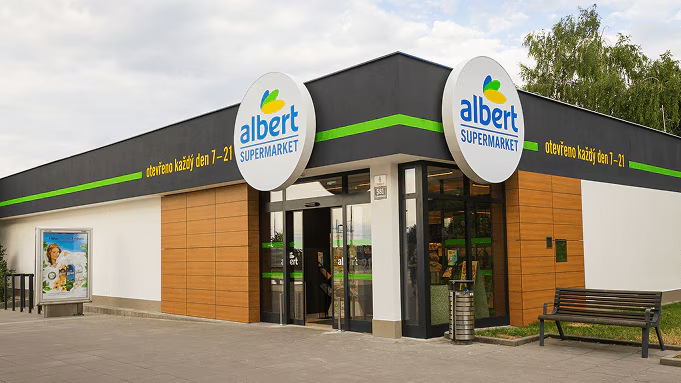
The buyer of Tesco’s operations in both countries will be Dutch company Ahold Delhaize, which already operates the Albert supermarket and hypermarket chain in the Czech Republic. The deal will mark the company’s return to the Slovak market. Ahold previously operated in Slovakia under the Hypernova and Albert brands, but sold its local business in 2014 to a group linked to the Terno store chain.
Ahold Delhaize is one of the world’s largest international retail groups specialising in food sales. The company operates stores across Europe, the United States and Indonesia. According to the group, its portfolio comprises 9,551 stores, which serve around 77 million customers every week. The company employs more than 384,000 people in nine countries.

Details of the Deal
The transaction covers Tesco’s entire retail business in Slovakia and the Czech Republic. More than 360 company-owned supermarkets, hypermarkets and smaller-format stores operate in the two countries, alongside over 100 franchise outlets. Together, they employ more than 14,000 people.
The combined annual revenue of these operations is approximately €3.5 billion. The deal also includes offices and distribution centres, including logistics facilities in Kralupy nad Vltavou in the Czech Republic and Prešov and Beckov in Slovakia.
The total value of the transaction is estimated at €1.7 billion. Tesco expects to receive approximately €1.2 billion in net cash proceeds before tax and related costs. The British company intends to return most of the proceeds to shareholders through an additional share buyback.
What Will Change for Shoppers?
Ahold Delhaize has not yet announced whether it plans to rebrand Tesco stores in Slovakia as Albert. The group has experience converting acquired outlets to the Albert brand in the Czech Republic, but no specific plans for Slovakia have been disclosed so far.
There has also been no information about possible changes to prices, product ranges, Tesco’s online shop or its Clubcard loyalty programme. The buyer says it intends to invest in store modernisation, technology and the development of services, but has yet to present a detailed plan for the Slovak market.
Until the transaction is completed, the stores will continue operating as part of the Tesco group. The acquisition must be approved by the relevant regulatory authorities, including competition regulators. The companies expect the process to be completed in the second half of 2027, with Ahold Delhaize targeting the fourth quarter.
Why Is Tesco Selling Its Business?
The British group says the decision is part of an effort to simplify its business structure and focus on its core markets — the United Kingdom and Ireland. After selling its Czech and Slovak operations, Tesco will retain a presence in Central Europe only in Hungary.
Tesco’s Slovak subsidiary remains one of the major players in the local retail market. Its revenue reached €1.73 billion in 2025. However, its net profit has fallen by more than threefold over the past three years, standing at €26.42 million in 2025.
Tesco has been operating in Slovakia since 1996. In addition to its stores, the company runs the Tesco Mobile network and operates its own network of petrol stations. It has not yet clarified whether the sale will affect these businesses or how their future operations will be organised.