Abnormally low water levels on the Danube this summer are giving researchers an opportunity to examine objects that are normally hidden underwater. As the river recedes, a variety of historical artifacts continue to emerge from the riverbed.
Over the past few days alone, 18 wooden piles from an old bridge across the Váh River have emerged from the water near Komárno. Archaeologists believe they may be the remains of a bridge built in 1848–1849.
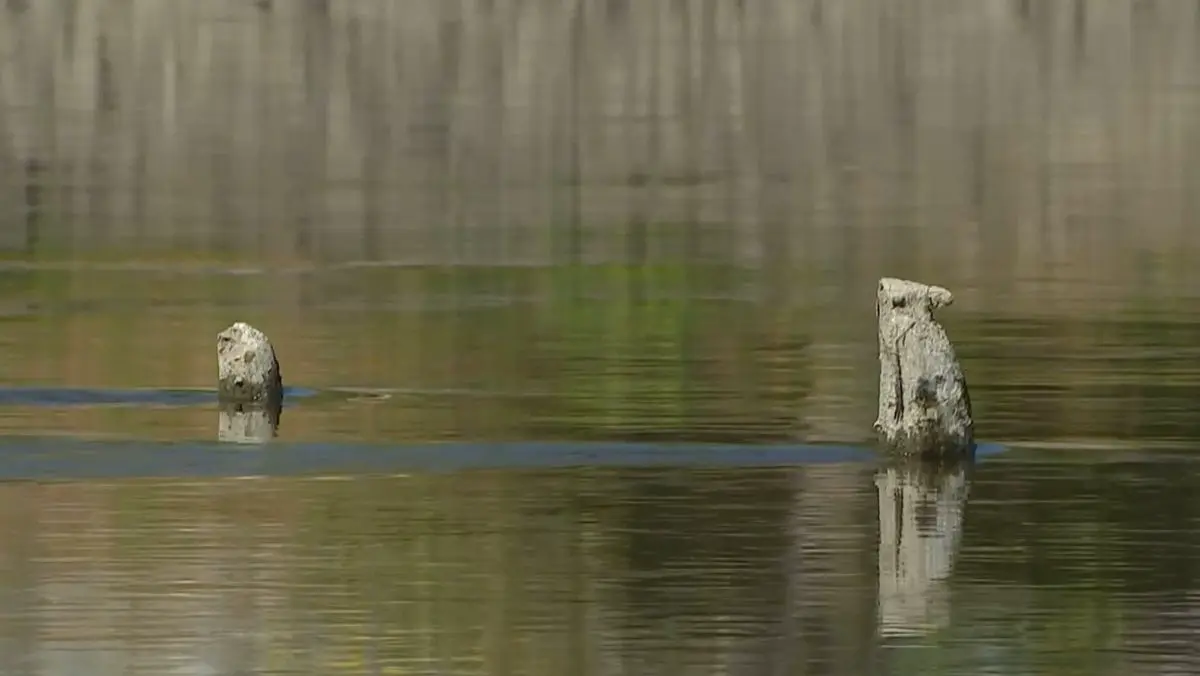
Another discovery was made near the village of Medveďov in the Trnava Region. Researchers found fragments of the German ship Wotan, which sank in September 1944 after striking a river mine.

Wreckage of the German ship Wotan in the Trnava Region. Video: SLOVENSKÝ VODOHOSPODÁRSKY PODNIK, štátny podnik
Earlier, an English anti-ship mine from the Second World War was discovered on the bottom of the Danube in southern Slovakia.

Traces of history have also emerged along other sections of the Danube. In Bulgaria, low water levels exposed the remains of a 4th-century Roman bridge between the territories of modern-day Bulgaria and Romania. The structure was located near the present-day village of Gigen. Its construction is associated with Roman Emperor Constantine I.

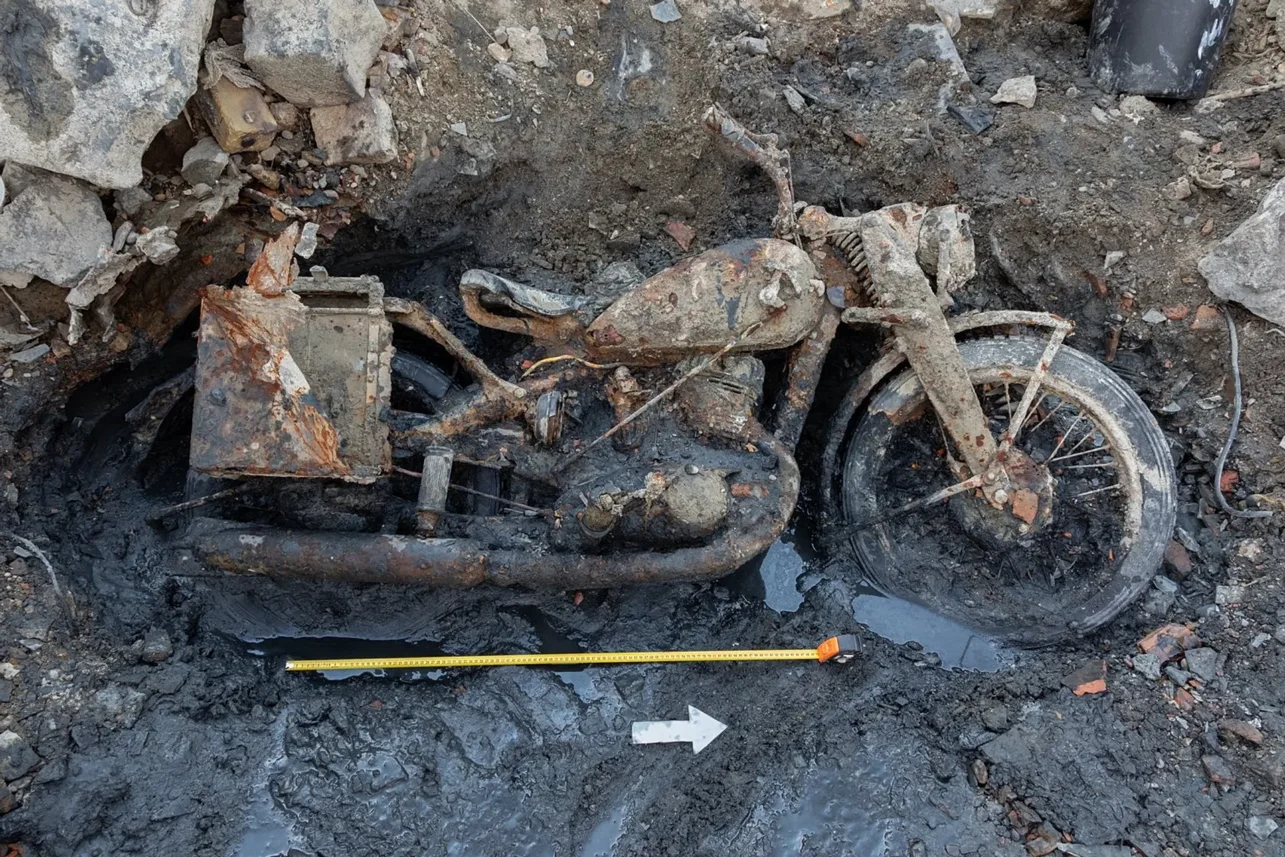
In Budapest, the Danube revealed another artifact from the Second World War — an almost completely preserved German Wehrmacht motorcycle that had remained buried in river mud for decades.
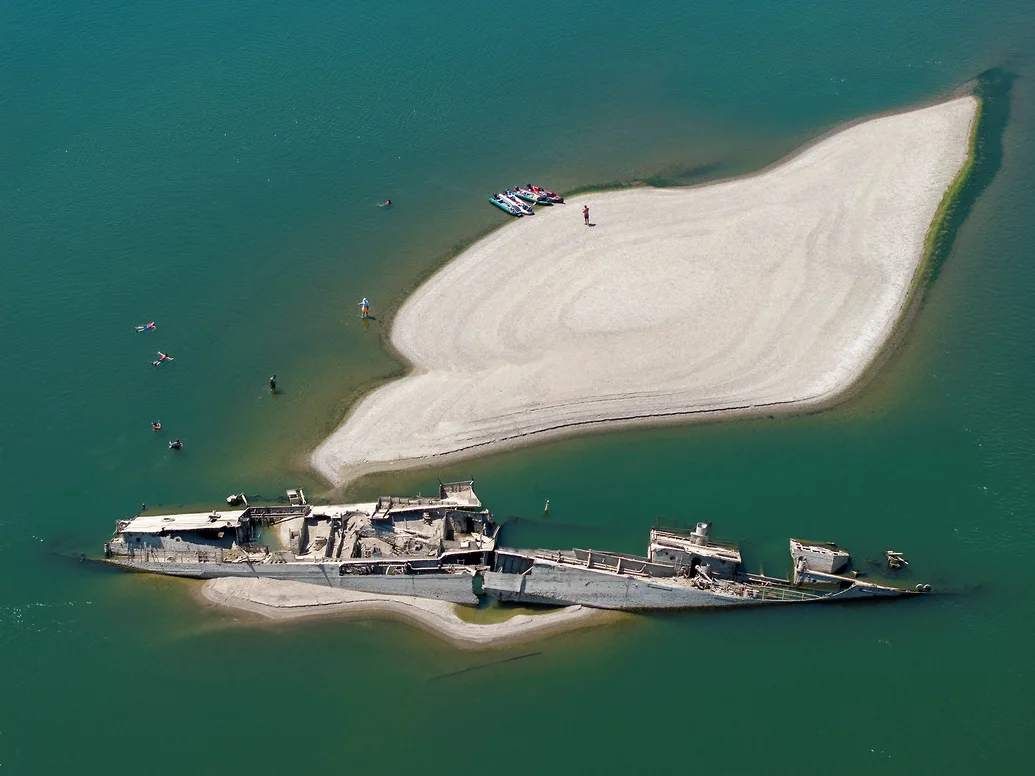
However, the most significant discoveries have been made in Serbia. During the retreat of German forces in 1944, around 200 vessels were deliberately sunk in the area of eastern Serbia in an attempt to hinder the advance of Soviet troops along the Danube. The vessels included minesweepers, patrol boats and artillery ships.
The unusually low water levels have now made some of these wrecks accessible for inspection. In August, Serbian specialists managed to raise one of the German vessels for the first time in 80 years.
According to the Slovak Hydrometeorological Institute (SHMÚ), the average Danube discharge in Bratislava in July was approximately three times lower than usual for the month. Moreover, it was the lowest average monthly discharge recorded since observations began in 1900.
On several days, the river flow repeatedly reached levels classified as extreme hydrological drought. However, the absolute record low has not yet been broken: the lowest average daily discharge ever recorded in Bratislava occurred in 2018, while the lowest single-day figure was recorded on 6 January 1906.
What makes the current situation particularly unusual is that such low water levels are occurring in summer. Normally, the lowest Danube water levels are recorded during the winter months — December, January and February.


