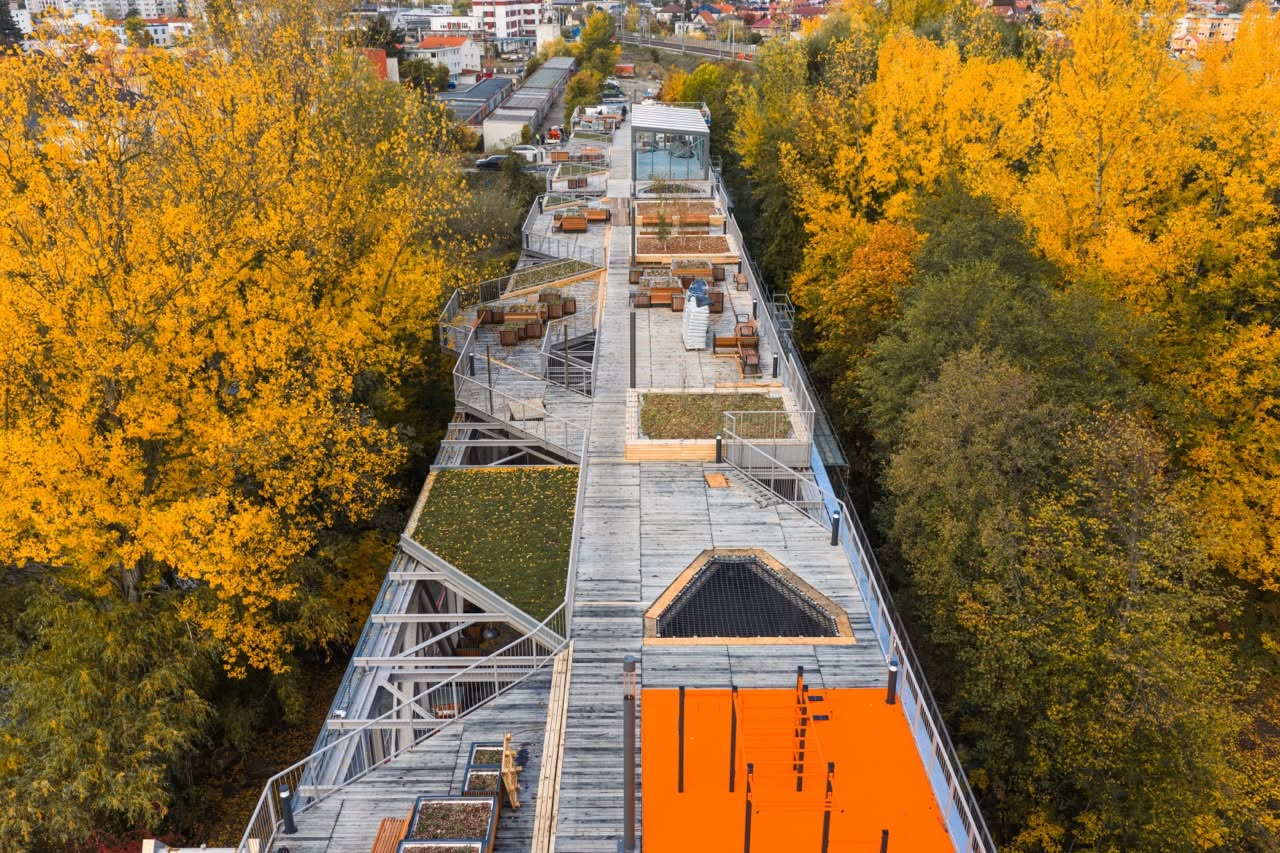
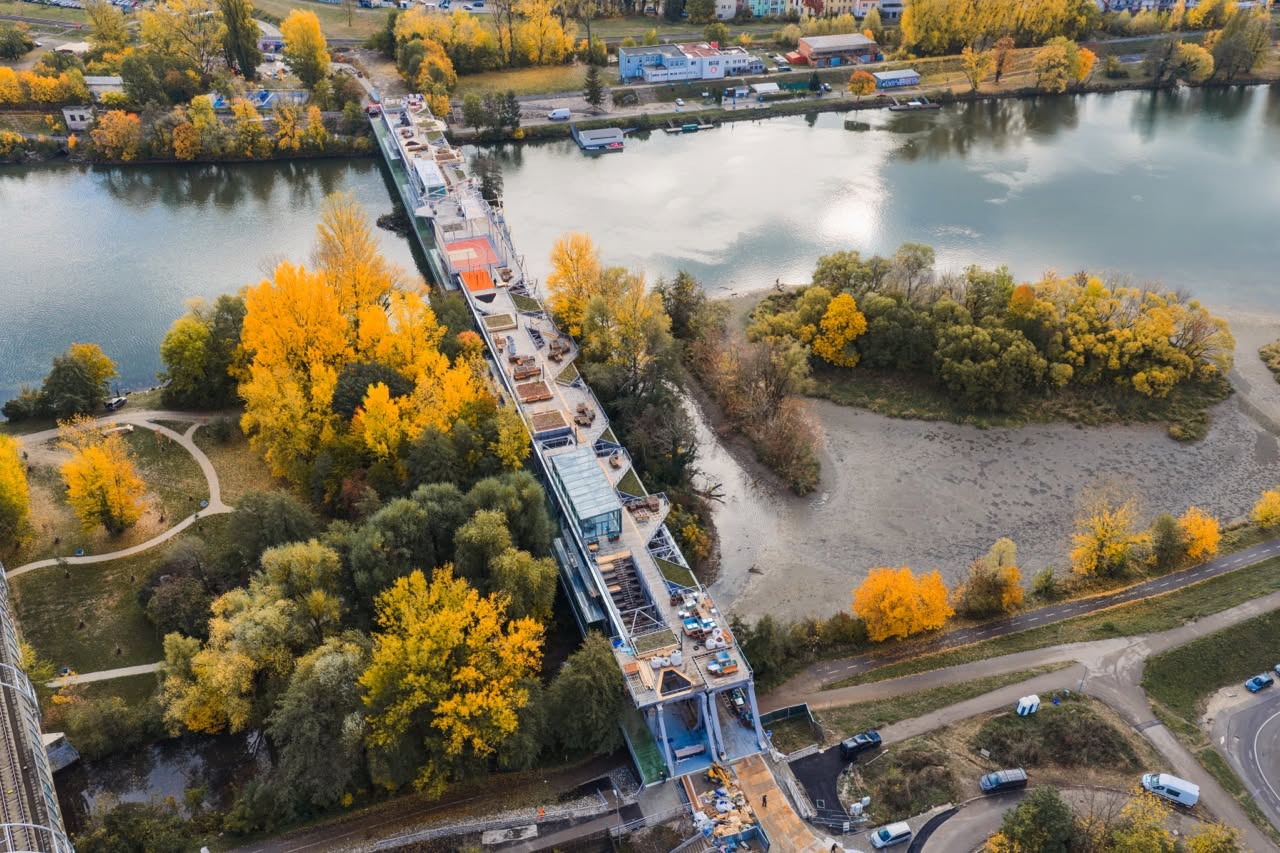
An unusual urban regeneration project has been completed in Trenčín. A former railway bridge over the Váh, built in the 19th century, has been transformed into a public space featuring walking paths, green areas and places to relax. We take a look at how the abandoned railway structure has been given a new lease of life, what visitors can now find on the bridge and why its reconstruction proved to be a challenging undertaking.

Most Fiesta, which could become one of Slovakia’s most unusual public spaces, was originally built in 1883. It was the first structure in Trenčín to allow trains to cross the Váh. During the Second World War, the bridge narrowly escaped complete destruction when retreating German troops blew it up. The explosion was so powerful that it damaged buildings within a radius of approximately half a kilometre. After the war, one section of the structure was restored, while the other had to be completely rebuilt in 1946.
Trains continued to use the bridge until 2017, when a new railway crossing over the river was opened in the city. The old structure was then left for pedestrians and cyclists. Slovak Railways planned to dismantle it and sell it for scrap, but the city authorities saw much greater potential in the structure. Trenčín decided to preserve the bridge and use it to open up new spaces along the Váh for residents and visitors.
The idea behind the transformation was inspired in large part by New York’s famous High Line. There, a former elevated freight railway, approximately 2.3 kilometres long, was converted into an urban park featuring plants, benches, art installations and views of Manhattan. Today, it is one of the city’s best-known walking areas.
The Trenčín version is more compact, but offers its own approach. The aim is to combine a walking area with gastronomy, sports facilities and cycling infrastructure. The project’s designers wanted to create more than just a scenic route above the river: their vision was a fully fledged public space where people could relax, grab a bite to eat or spend time with their families.
What has been added to the bridge?
Most Fiesta stretches for 255 metres and offers views of the river and Trenčín Castle. The space has been arranged across several levels. It now features places to relax, green areas, ornamental grasses, shrubs and climbing plants. The upper terrace has been fitted with oak decking, making walks more comfortable and helping to reduce noise.
The project also includes a greenhouse, sports facilities and a cycling route. The former industrial structure is therefore intended to become a destination where visitors can spend several hours, rather than simply stop to admire the view.
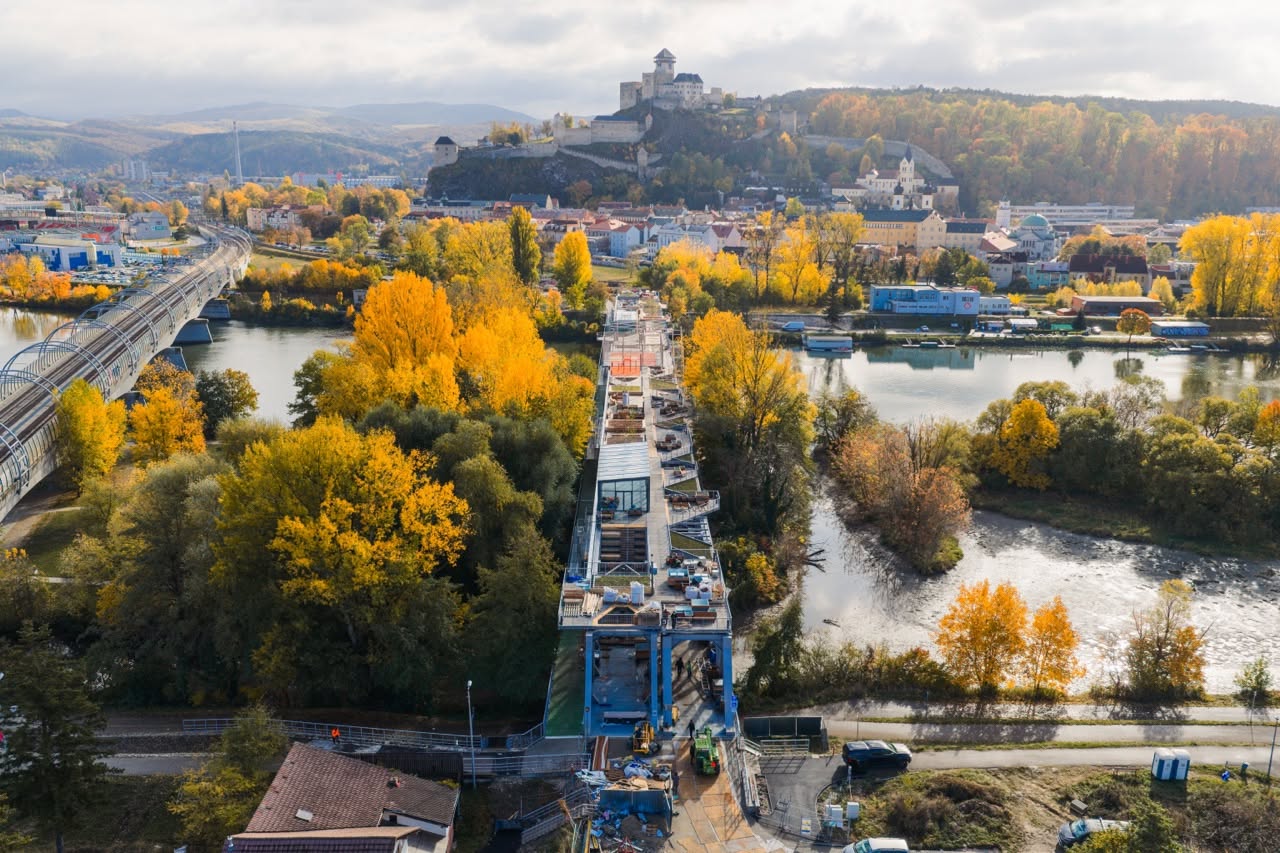
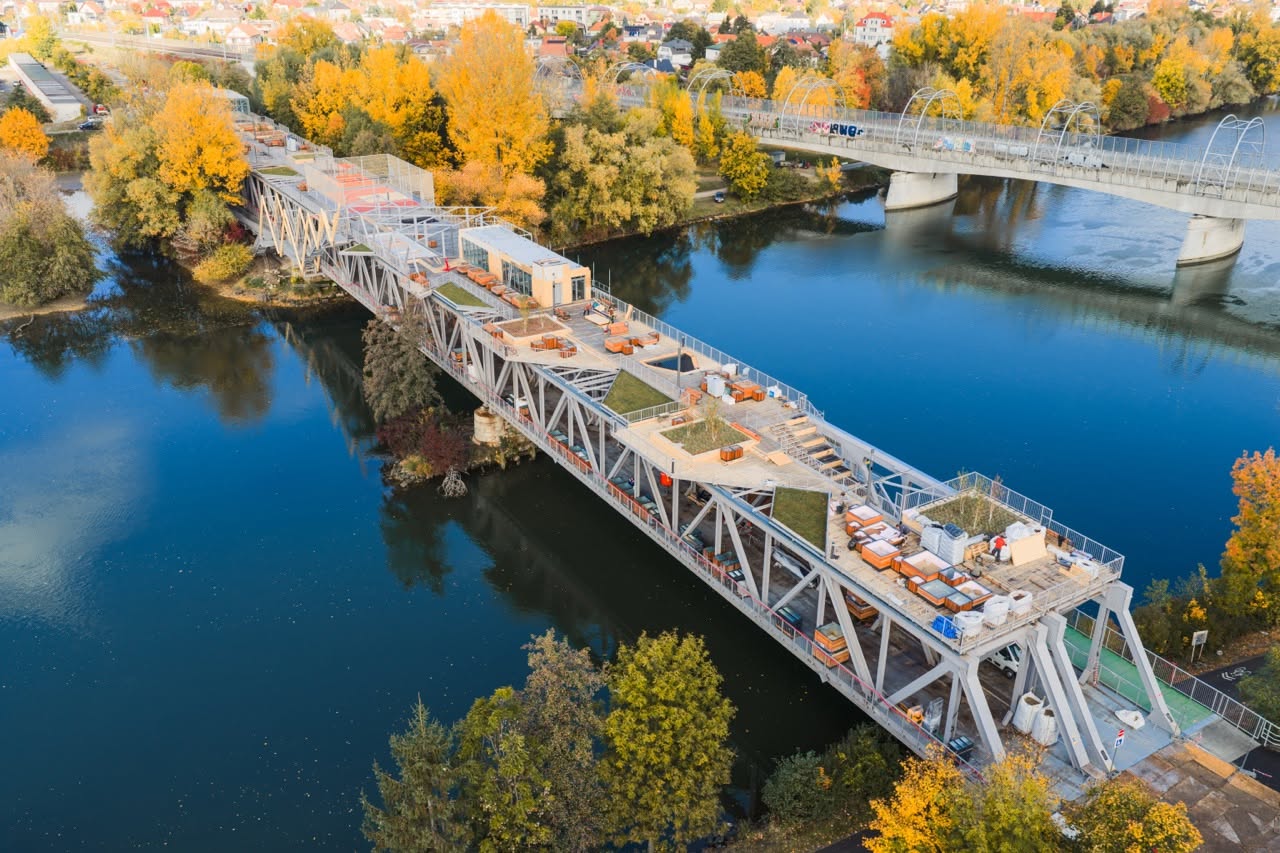
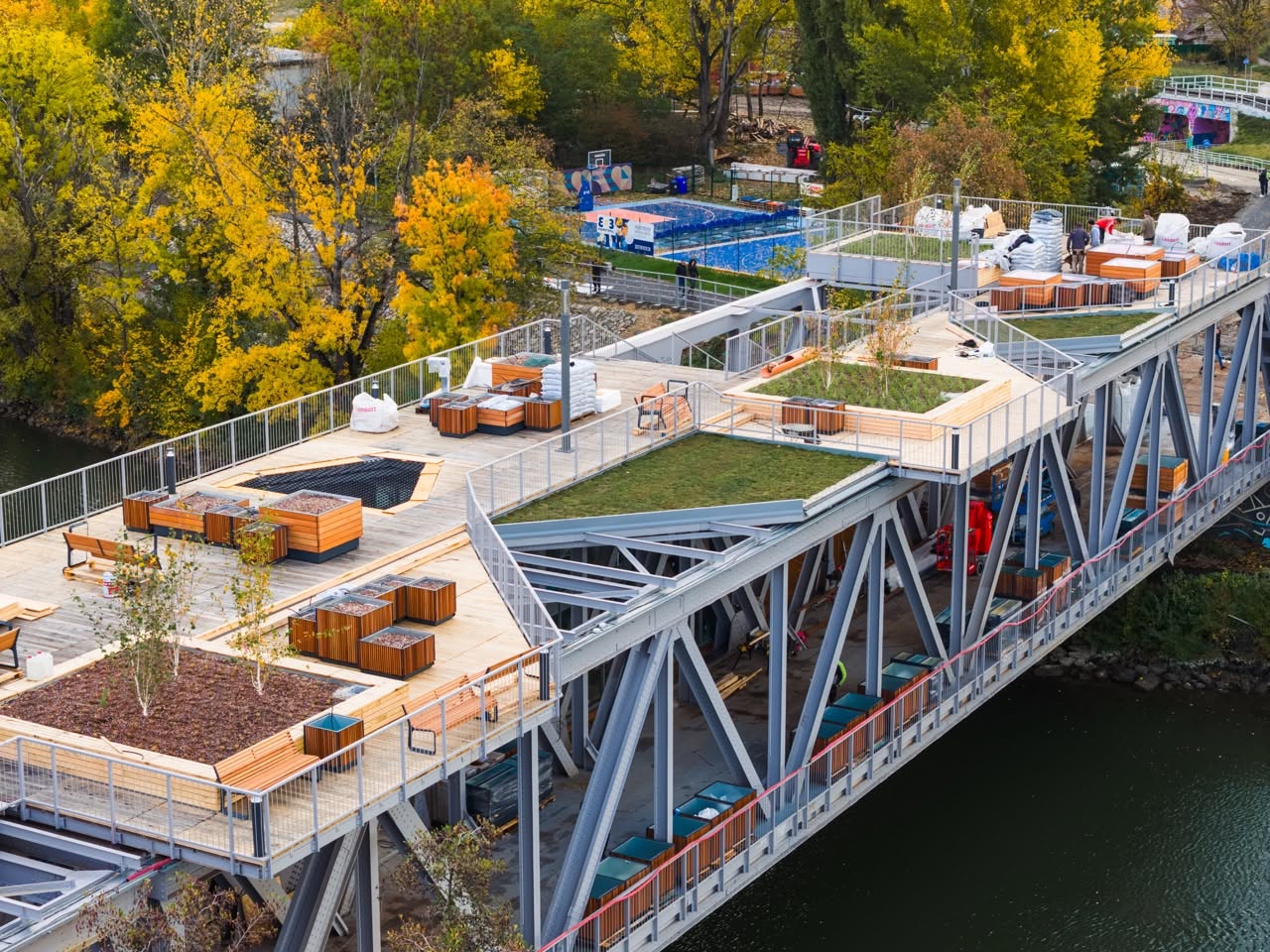
Pedestrians and cyclists began using the renovated bridge in September, while its official opening took place on 13 November. However, visitors will have to wait until spring 2027 to enjoy the full range of food and drink options. Restaurant and retail operators are only now taking possession of their premises and will be fitting them out over the coming months.
Future plans include food tours, a community centre and a tourist information point. This is particularly relevant because several major cycling routes pass through Trenčín, connecting the city with destinations including the Czech Republic.
Before the opening, 81 trees, 44 shrubs, thousands of perennials and 35,000 bulb plants were planted in 147 planters on the bridge. In the evening, the structure is illuminated by 450 programmable LED lights. The bridge also houses premises for a café-bar, bistro, restaurant, bicycle service centre and youth club, as well as a basketball court.
As of 13 November 2026, the pedestrian area, upper terrace and parallel cycle path are open to the public. Due to the winter season, the basketball court and the access route down to the river floodplain are temporarily closed. Visitors are also advised to take care on the oak decking of the upper terrace in wet or freezing weather.
From 27 to 29 November, the bridge and its surroundings will host an official cultural programme as part of the city’s Fiesta mesta festival. The full opening of all restaurants, cafés and sports facilities is planned for spring 2027.
How was the bridge rebuilt?
The transformation of the site cost approximately €11 million. Work began in early 2025, but reconstructing the old structure proved more complicated than initially expected. Builders had to reinforce damaged sections, treat exposed reinforcement bars to prevent corrosion and repair the concrete supports.
In addition, the bridge was originally too narrow to accommodate the planned cycle lane, so it was widened with an additional steel structure. It can now withstand the considerably greater loads required for its new public use.
There were also environmental restrictions. During construction, workers had to take account of swallow nesting sites and ensure that building materials and waste did not enter the Váh. Unexpected problems discovered after work had begun contributed to additional costs and delays. Nevertheless, approximately €5 million of the project was covered by European funding.